When you check the weather forecast before leaving home, scroll through Netflix recommendations, or read about a new medical breakthrough, you're experiencing the power of statistics in action. From the moment you wake up to when you go to sleep, statistical analysis shapes nearly every aspect of modern life.
Why is statistics important? Statistics transforms raw data into actionable insights that drive better decisions. It helps us identify patterns, test hypotheses, measure performance, forecast future trends, and make sense of complex information in fields ranging from business and healthcare to education and entertainment.
In today's data-driven world, understanding statistics isn't just for mathematicians and researchers. Whether you're a business professional analyzing sales data, a student evaluating research findings, or a consumer comparing product reviews, statistical thinking helps you make informed decisions based on evidence rather than intuition alone.
This comprehensive guide explores real-world applications of statistics across five major fields, demonstrating why statistical literacy has become an essential skill.
Statistics in Business: Market Research, Financial Analysis & Decision-Making
Statistics plays a vital role in the field of business, as it allows for the analysis and interpretation of business data to make forecasts and informed decisions.
 Statistical analysis helps businesses make data-driven decisions about market trends and forecasts
One of the most important applications of statistics in business ismarket research. Companies use statistical analysis to gather and interpret data on consumer behavior, market trends, and competitive activity to make strategic decisions about product development, marketing, and sales. For instance, a company may use survey data and statistical analysis to determine which features of a new product appeal to consumers or to identify the target demographic for a marketing campaign.
Another critical use of statistics in business is in the area offinancial analysis. Companies use statistical techniques to analyze financial data, such as sales revenues and expenses, to make predictions about future performance and identify areas for cost savings. For example, a company may use statistical methods to forecast future sales based on historical data to decide production and inventory levels.
Statistics analysis is also vital inquality control and process improvement. Businesses use statistical methods to monitor and improve the quality of their products and services. A manufacturing company may use statistical process control to monitor production processes and identify sources of variability to improve efficiency and reduce defects.
In addition, statistics play a crucial role inrisk management. Businesses use statistical analysis to assess and manage the risks associated with their operations. A financial institution may use statistical models to determine the risk of default on loans and to develop strategies for managing that risk.
And what do business decision-makers do with all this information? Said they evaluate alternative courses of action and make data-driven decisions. I.e., a retail company may use statistical analysis to assess the potential return on investment of opening a new store in a particular location.
Statistics in Social Sciences: Research, Psychology & Policy Making
Statistics analysis is an essential tool in social sciences as it allows researchers toanalyze and interpret data to understand social phenomenaand make valid and reliable conclusions.
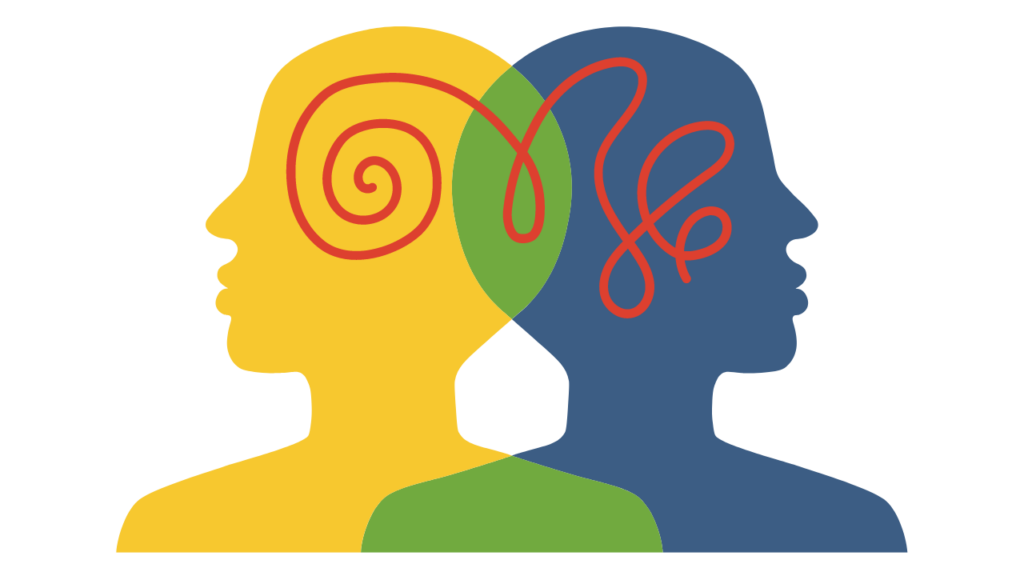 Social scientists use statistical methods to analyze survey data and understand social phenomena
One of the critical applications of statistics in social sciences is insurvey research. Social scientists use statistical methods to design, conduct and analyze surveys to gather data about individuals, groups, or populations. For example, a study may use survey data and statistical analysis to understand the factors associated with political participation among different ethnic groups. The findings from this research can inform policy decisions and interventions aimed at increasing political participation among underrepresented groups.
Another important use of statistics in social sciences is in the area ofexperimental research. Social scientists use experimental designs and statistical analysis to test cause-and-effect relationships between variables. For example, a study may use a**randomized controlled trial**(RCT) to test the effectiveness of a new program aimed at reducing poverty in a specific community. The results of this study can inform policy decisions and interventions aimed at reducing poverty more broadly.
Social scientists use statistical methods toidentify patterns and relationships in these data, which can inform the development of theories and hypotheses. For example, a study may use statistical analysis of administrative data to understand the factors associated with educational attainment among different ethnic groups.
Furthermore, statistics allows for thegeneralization of findings from a sample to a larger population. Researchers use statistical methods to estimate the degree of uncertainty in their findings and to make inferences about the population from which the sample was drawn. This allows for the development of generalizable knowledge about a phenomenon.
In addition, statistics is a key tool in the field of evaluation research. Social scientists use statistical methods toassess the effectiveness of programs, policies, and interventions. For example, a study may use statistical analysis to evaluate the effectiveness of a new policy aimed at reducing crime in a specific neighborhood. The results of this study can inform decisions about whether to continue, modify or discontinue the policy.
Last but not least, statistics are a necessary tool in psychology as it allows researchers to analyze and interpret data tounderstand behavior and mental processesand make valid and reliable conclusions. One of the critical applications of statistics in psychology is in experimental research. Researchers use statistical methods to design and analyze experiments to test hypotheses about behavior and mental processes. For example, a study may use statistical analysis to determine if a new therapy is more effective than traditional therapy in treating a specific mental health condition. The results of this study can inform the decision of whether or not to adopt this therapy as a treatment option.
Statistics in Education: Student Performance & Curriculum Assessment
Statistics plays a crucial role in education. For instance, educators mayevaluate students' performanceusing statistical methods to analyze data from standardized tests, assessments, and exams to assess student learning and identify areas for improvement.
 Educators use statistics to evaluate student performance and assess curriculum effectiveness
For example, a school district may use statistical analysis toevaluate the effectiveness of a new curriculumby comparing the results of standardized tests from students who have studied with it to those who have not. This analysis allows the district to determine if the new curriculum is more effective than the previous one and to make decisions about curriculum implementation.
Furthermore, if you are using statistics in education, you may be interested inassessing the effectiveness of educational programssuch as after-school programs, tutoring, and mentoring. For example, a study may use statistical analysis to evaluate the effectiveness of a new reading program by comparing the reading scores of students who participated in the program to those who did not. This analysis allows educators to determine if the program is effective and to make decisions about program implementation.
Statistics also plays an invaluable role in analyzing and findinginsights about student demographics and characteristics. This can be used to identify patterns and trends in student populations, as well as to identify potential barriers to student success. For example, a study may use statistical analysis to understand the factors associated with high school graduation rates among different ethnic groups. The findings from this research can inform interventions aimed at increasing graduation rates among underrepresented groups.
Statistics in Healthcare: Clinical Trials, Epidemiology & Patient Outcomes
Statistics is used in designing, conducting, and analyzing clinical trials. Researchers use statistical methods to determine sample size, randomize patients, and analyze data to determine the safety and effectiveness of new drugs and treatments.
 Medical researchers use statistical analysis to evaluate treatment effectiveness and track disease patterns
For instance, epidemiologists use statistics to study thedistribution and determinants of diseases in populations. They use statistical methods to track and analyze data on health outcomes, risk factors, and health interventions, which helps them identify patterns and trends in disease occurrence.
Moreover, health systems use statistics totrack and improve the quality of carethey provide. They use statistical methods to monitor and analyze data on patient outcomes, patient satisfaction, and health care utilization. This helps identify areas for improvement and measure the impact of quality improvement initiatives.
Public health officials use statistics tounderstand and address health problems at the population level. They use statistical methods to monitor and analyze data on health outcomes, risk factors, and health interventions, which helps them develop and implement public health policies and programs.
Statistics plays a crucial role in medical research. Researchers use statistical methods toidentify associations between risk factors and disease outcomes, estimate the effectiveness of different treatments and interventions, and determine the factors that influence the spread of diseases.
To sum up, statistics allows us to measure the impact of healthcare interventions and track the progress of diseases in populations. Without statistics, healthcare professionals would not be able to understand the data they are collecting and make accurate predictions, which could lead to poor decision-making and harm patients.
Statistics in Entertainment: Audience Analytics & Content Optimization
One of the primary uses of statistics in entertainment is analyzingaudience engagement and viewing patterns– think of YouTube, Netflix, and so on.
By using statistical methods to analyze data from social media, streaming platforms, and other sources, entertainment companies can better understandwhat content resonates with audiencesand where and how people are consuming it. This information can be used to inform the development and distribution of new content, as well as to optimize marketing and advertising strategies.
 Entertainment companies use statistics to analyze audience engagement and optimize content recommendations
Statistics is also essential in the entertainment industry because it quantifiesthe performance of movies, TV shows, and other forms of entertainment. This can be done through various performance metrics and statistical tests, which allow entertainment companies to evaluate the popularity, financial success, and critical reception of their products.
Another use of statistics in entertainment is in the field of market research. By analyzing data on demographics, purchasing behavior, and other factors, entertainment companies can gain a deeper understanding of their target audience and use this information to inform the development of new products and services.
Frequently Asked Questions About Statistics
Why Understanding Statistics Matters
Statistics has evolved from a specialized academic discipline to an essential literacy skill for the modern world. As we generate more data than ever before, the ability to understand, interpret, and apply statistical concepts has become crucial for success in virtually every field.
Whether you're making personal decisions about health and finances, evaluating information in the news, or building a career in business, healthcare, education, or technology, statistical thinking provides the foundation for evidence-based decision-making. The examples throughout this guide demonstrate that statistics isn't just about numbers—it's about understanding the world around us and making better choices based on that understanding.
As we move forward, the demand for statistical literacy will only increase. By developing your understanding of statistics and its applications, you equip yourself with one of the most valuable skills in today's data-driven society.